RESOURCE:Mannheim — Web Design for a Zero Water City Research Project
Project overview
Web design and art direction for RESOURCE:Mannheim — a research initiative on circular water systems and water-sensitive urban design.
Challenges
Turning research into something people will actually read. Water-sensitive urban design sits at the intersection of hydrology, planning, and public policy — most of its documentation lives in PDFs and conference papers. The site had to surface the same depth of information without the academic friction, so the structure had to do real work: short entry points for casual readers, deeper layers for specialists, and clear paths between them.
Avoiding the visual defaults of "eco" design. Sustainability projects often fall into a familiar palette of leafy greens, hand-drawn icons, and lifestyle photography that reads more like a wellness brand than a research initiative. RESOURCE:MANNHEIM needed to feel future-facing and technically credible — closer to the visual language of urban planning and systems thinking than environmentalism — without losing warmth or human scale.
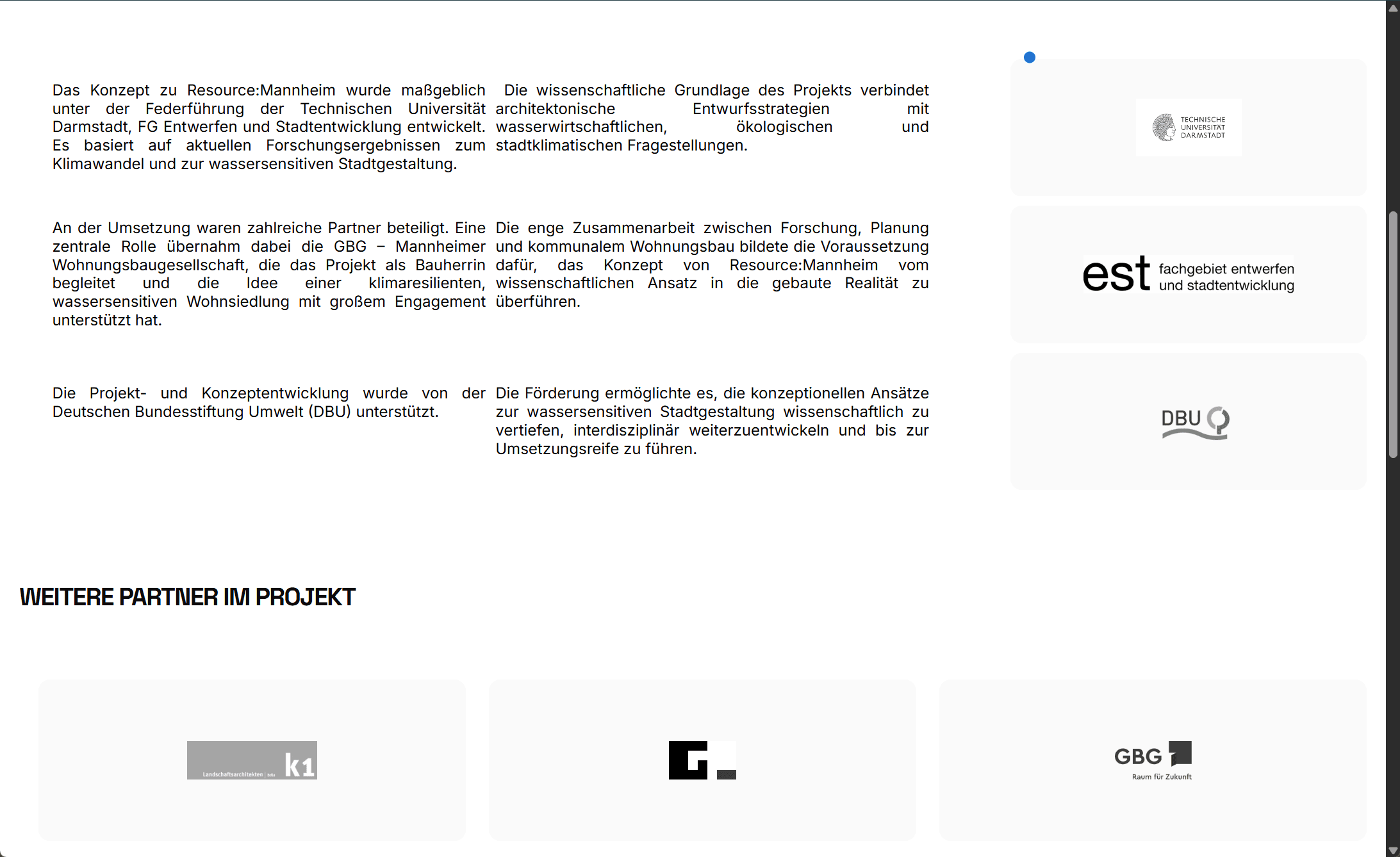
Serving multiple audiences from a single surface. The site had to function as a project platform for the team, a reference for collaborating institutions, and a communication tool for residents and press — three audiences with very different reading habits. The information architecture, type hierarchy, and section pacing all had to absorb that range, letting each audience find what they need without forcing the others through it.
Results
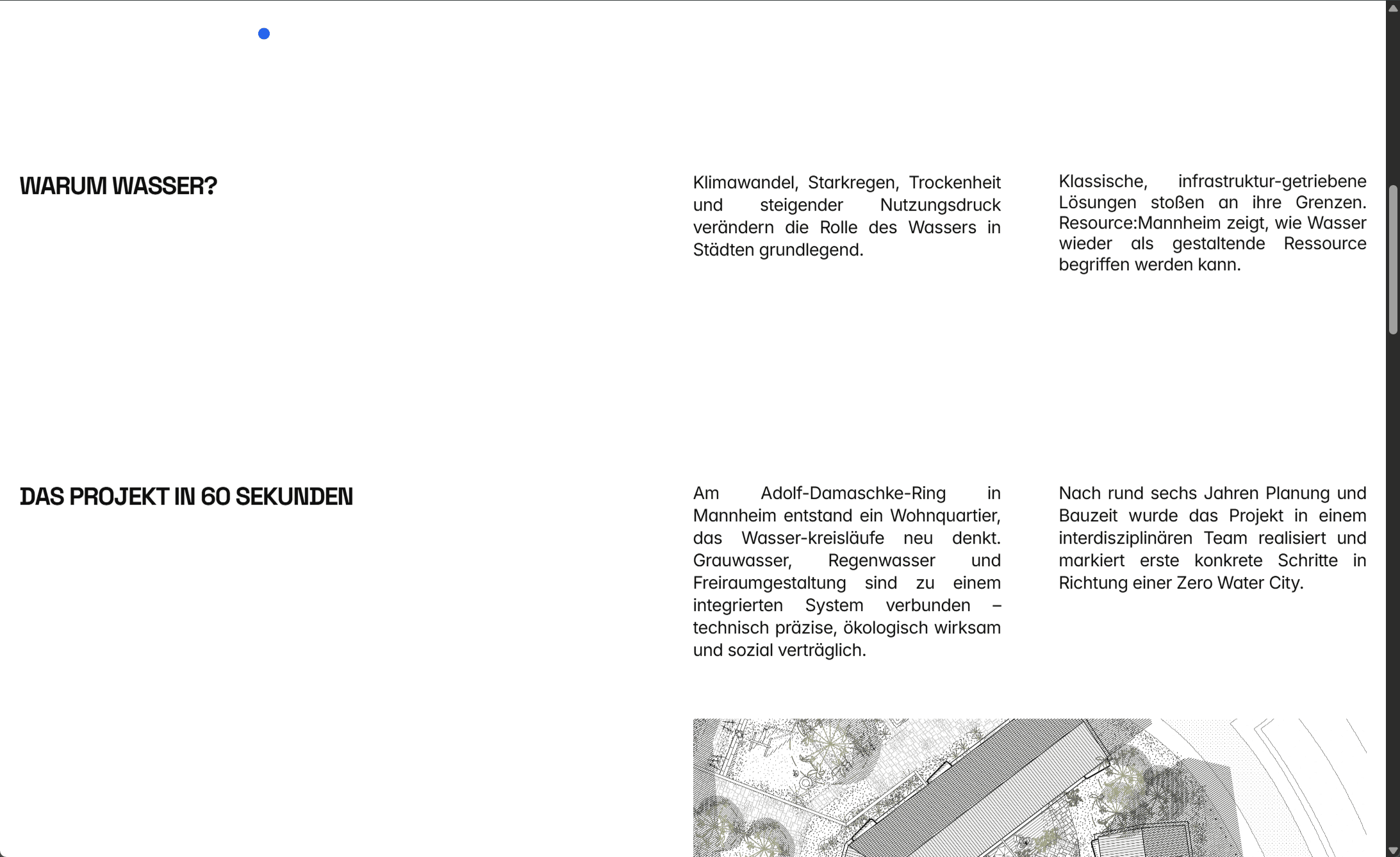
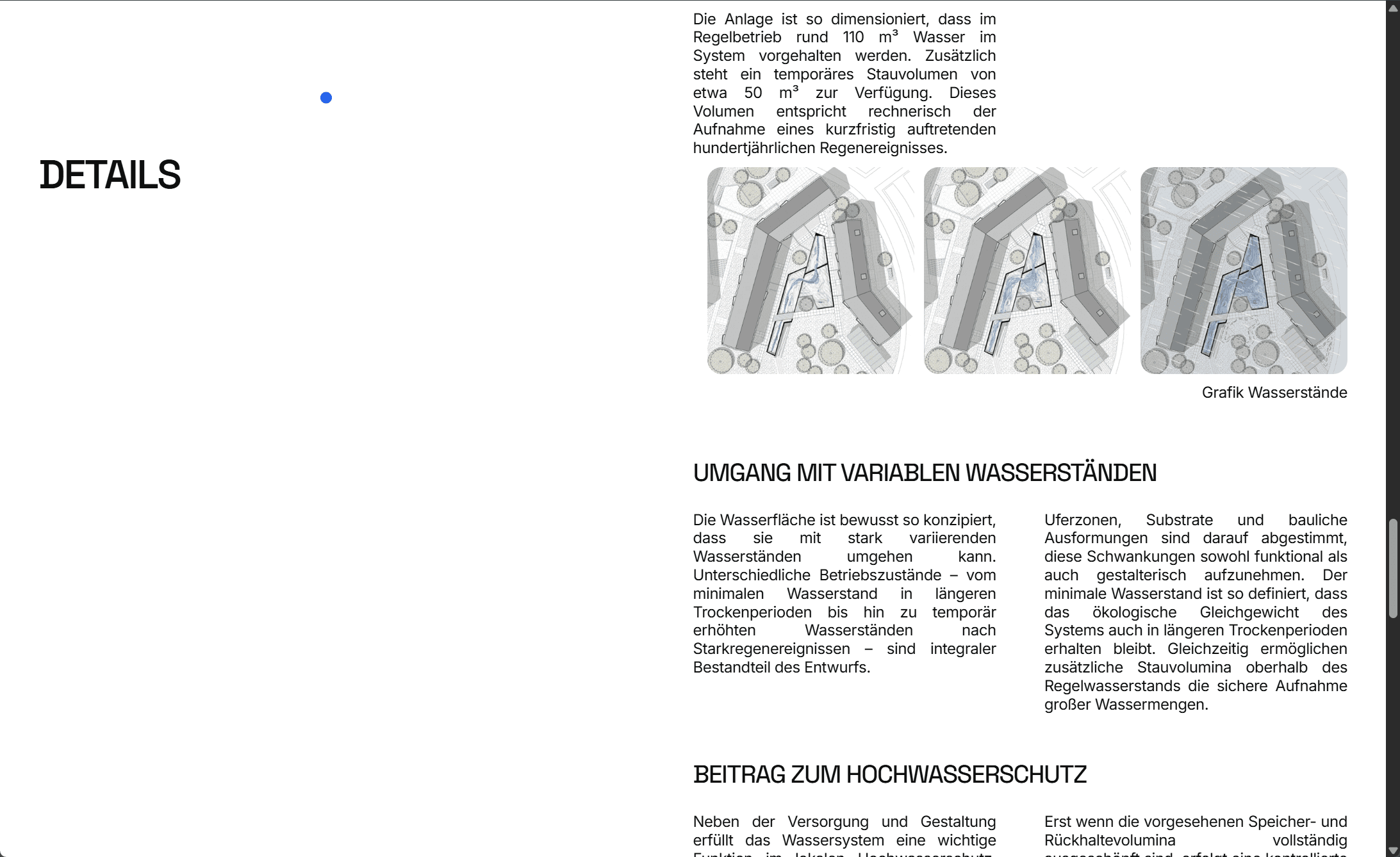
he finished site reframes RESOURCE:MANNHEIM as a piece of public-facing infrastructure in its own right — modular layouts, map-influenced compositions, and data-driven graphic moments let complex water-cycle ideas land at a glance, while deeper sections give researchers and planners the detail they came for. Generous whitespace and a restrained typographic system carry the scientific tone without making the content feel cold. The system was designed to grow with the research: new case studies, team members, and news entries plug into the existing structure without disturbing its visual rhythm.
RESOURCE:Mannheim — Web Design for a Zero Water City Research Project
Project overview
Web design and art direction for RESOURCE:Mannheim — a research initiative on circular water systems and water-sensitive urban design.
Challenges
Turning research into something people will actually read. Water-sensitive urban design sits at the intersection of hydrology, planning, and public policy — most of its documentation lives in PDFs and conference papers. The site had to surface the same depth of information without the academic friction, so the structure had to do real work: short entry points for casual readers, deeper layers for specialists, and clear paths between them.
Avoiding the visual defaults of "eco" design. Sustainability projects often fall into a familiar palette of leafy greens, hand-drawn icons, and lifestyle photography that reads more like a wellness brand than a research initiative. RESOURCE:MANNHEIM needed to feel future-facing and technically credible — closer to the visual language of urban planning and systems thinking than environmentalism — without losing warmth or human scale.
Serving multiple audiences from a single surface. The site had to function as a project platform for the team, a reference for collaborating institutions, and a communication tool for residents and press — three audiences with very different reading habits. The information architecture, type hierarchy, and section pacing all had to absorb that range, letting each audience find what they need without forcing the others through it.
Results
he finished site reframes RESOURCE:MANNHEIM as a piece of public-facing infrastructure in its own right — modular layouts, map-influenced compositions, and data-driven graphic moments let complex water-cycle ideas land at a glance, while deeper sections give researchers and planners the detail they came for. Generous whitespace and a restrained typographic system carry the scientific tone without making the content feel cold. The system was designed to grow with the research: new case studies, team members, and news entries plug into the existing structure without disturbing its visual rhythm.